The Battle of Gettysburg
2024 marks a century since the opening of the Causeway, the iconic bridge that seamlessly connects Singapore and Malaysia, shaping the lives and histories of both countries. These are the untold stories of characters from different periods – from the early 1920s with Hedwig Anuar as her family fled Johor during World War II, to the men who witnessed the British blowing up the Causeway and its eventual reconstruction. How the change in the passport was a turning point, and more recently, the COVID-19 border shutdown that saw an enterprising man deliver 64,000kg of breastmilk across the Causeway for more than 500 working mothers in Singapore.
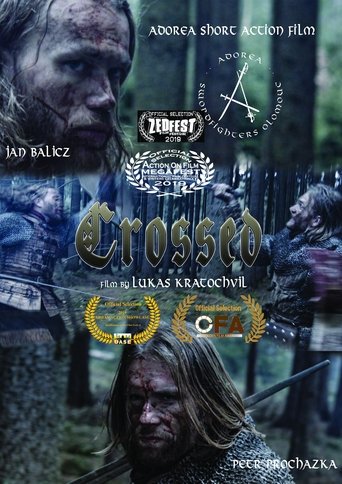
Crossed: sword and shield duel, action short movie, sword fighting, Award winning
Czech painter and illustrator Alphonse Mucha (1860-1939) ranks among the pioneers of the Art Nouveau movement at the end of the 19th century. Virtually overnight, he becomes famous in Paris thanks to the posters that he designs to announce actress Sarah Bernhardt’s plays. But at the height of his fame, Mucha decides to leave Paris to realize his lifetime project.
Helen Castor presents an in depth and insightful series covering England's early Queens, from the High Middle Ages with Eleanor and get daughter-in-law Eleanor of Aquitane, through the Late Middle Ages with Isabella of France and Margaret of Anjou and finishing with Lady Jane Grey, Mary I and Elizabeth I.
When their father is falsely accused of witchcraft and departs to clear his name, five resourceful siblings must band together to stop their scheming neighbor’s bid to seize their family’s fortress.
Boris Zhadanovsky, a hereditary nobleman and officer who was predicted to have a brilliant military career, sides with the rebellious people. In 1905, Zhadanovsky is sentenced to death for his revolutionary activities. However, a powerful strike movement organized in response to the court's decision forces the tsarist government to commute the sentence to life imprisonment. After the revolution, Zhadanovsky joins the Red Army and dies fighting the White Army.
The history of the Teatro Abierto, which was initiated on July 28, 1981 as a cultural reaction against the last Argentine civic-military dictatorship, and organized by a group of artists and workers from the theater world
An old man recounts: I have always worn glasses. Even in the camp, I managed to keep them. We feared the night almost as much as the day. One night, they brought in a newcomer, a bearded man. His drawings over the days had become essential to us. The guards did not understand that only death would prevent him from drawing. All that remains of the camp is this piece of wall, with his last drawing, which he called "Ligne de vie (Lifeline)."
In 1793, a police officer tries to save the ex-Queen from the guillotine.
On the centenary of Sarah Bernhardt's death, we take a look back at the whimsical life of the whimsical and eventful life of "la Divine", who defied theatrical traditions.
Thangarasu, a goldsmith's son, and Poonkuruvi, a gypsy and poultry seller, fall in love during the era of British rule. However, Thangarasu soon attracts the affections of a young English lady.
Jimmy Higgings is a worker of the plant making weapons for the Tsarist Russia and the German Empire. During World War I, Jimmy speaks at a spontaneous rally against the war. He is arrested. When released, he becomes unemployed. He is happy to hear the news about the revolution; he volunteers into the American expeditionary force thinking that having the weapons he can fight against Germans – the enemies of the Russian revolution. However, finding himself in Russia, Jimmy soon realises that the expeditionary force of American volunteers fights not against the Germans, but against the young Socialist Russia. Without any hesitations, he takes the path of revolutionary struggle, he spreads propaganda among the American soldiers and distributes Bolshevik leaflets. Captured by the American military police, Jimmy Higgings does not betray his friends. He is sentenced to twenty years in a military prison. Jimmy cannot stand it and loses his mind. Lost movie.
It is 1882, and while negotiations for the cession of Thessaly to Greece are underway, the bandit Stelios Karanasos and his men, taking advantage of the Ottomans' indifference to the region, plunder and terrorize the mountain villages. When his gang robs and burns down the house of the Zorba brothers, they kidnap Karanasos' sister, Krini, and demand a ransom for her release. During the three days she remained with them, Dimitros, the youngest of the four brothers, fell deeply in love with her. The feeling is mutual. After her release, Dimitros tries to visit her secretly at her home, but Karanasos captures him. His brothers then attack the house to free him and, during the clash, Karanasos is killed. Dimitrios and Krinio are now free to enjoy their union and live happily ever after.
Inuk filmmaker Zacharias Kunuk (Atanarjuat: The Fast Runner) returns with this Arctic epic inspired by the classic John Ford western of the same name, about a vengeful husband who sets off in pursuit of the violent men who kidnapped his wife and destroyed his home.
William Rice is perhaps the wealthiest man in Texas. With no heirs, Rice plans to leave his estate in the form of a much-needed college. Relying on the good nature and upstanding character of his lawyer, Rice feels confident that his wealth and name will leave a prestigious legacy for generations. When nefarious forces threaten the planned college, the two are left fighting to retain his legacy.
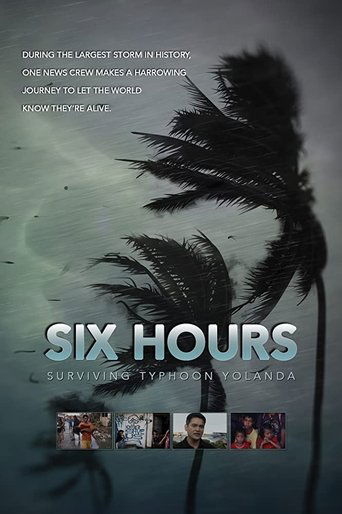
In the middle of a broadcast about Typhoon Yolanda's initial impact, reporter Jiggy Manicad was faced with the reality that he no longer had communication with his station. They were, for all intents and purposes, stranded in Tacloban. With little option, and his crew started the six hour walk to Alto, where the closest broadcast antenna was to be found. Letting the world know what was happening to was a priority, but they were driven by the need to let their families and friends know they were all still alive. Along the way, they encountered residents and victims of the massive typhoon, and with each step it became increasingly clear just how devastating this storm was. This was a storm that was going to change lives.
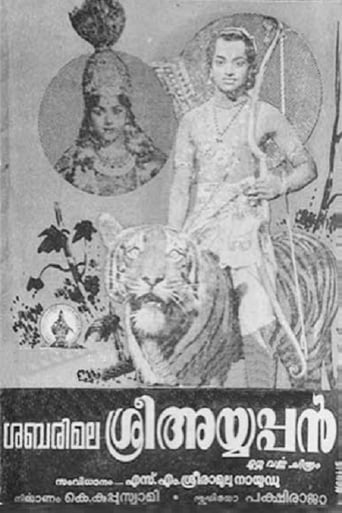
King Rajasekhara, the king of Pandalam, finds a child on the banks of River Pampa during one of his hunting expeditions. A saint who appears there advises the king to adopt this child name him as Manikantan
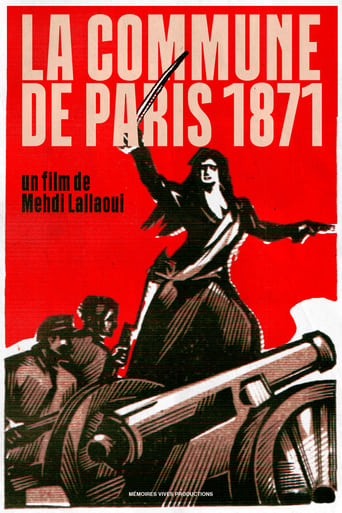
Mehdi Lallaoui's documentary begins where it all ended, in New Caledonia, with images of the ruins of the penal colony where many Commune insurgents were deported, including Louise Michel. The director thus tracks down all the still visible traces of the insurrectional movement, in the South Pacific but especially in Paris, by following Alain Dalotel, author of numerous works on the Commune (and who died on May 29, 2020 in Bagnolet). He also tracks down all the archives, allowing us to understand, with the means of communication and information of the time (and with a voice-over by Bernard Langlois), what contemporaries experienced between March and May 1871: their hopes, their dreams, their fears, their anger.
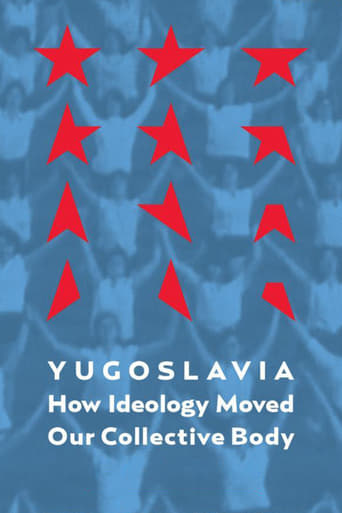
A research-based essay film, but also a very personal perspective on the history of socialist Yugoslavia, its dramatic end, and its recent transformation into a few democratic nation states.
Activate your FREE Account!
You must create an account to continue watching