A love letter to the joys and pleasures of champagne.
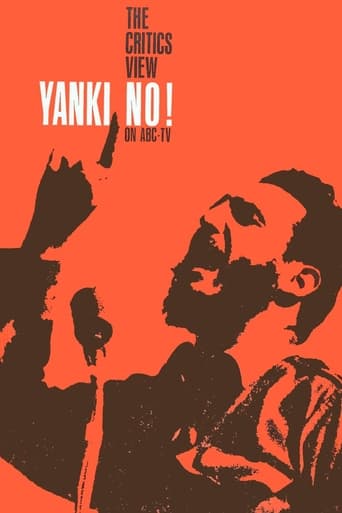
A 1960 cinéma vérité documentary on anti-American sentiment in Latin America, combining observational footage from Caracas and political events, directed by Robert Drew and shot by Maysles, Leacock, and Pennebaker. (Note: Originally broadcast as a standalone documentary on ABC, "Yanki, No!" is widely cited and archived as a discrete direct-cinema film with its own title, production identity, and critical reception, rather than as an anonymous TV news magazine episode.)
A year in the life of the Palm Springs Follies, featuring beautiful, ageless performers from around the world in a show that is always Standing Room Only. The film intercuts colorful interviews with the participants and footage of auditions, rehearsals, and the actual performances.
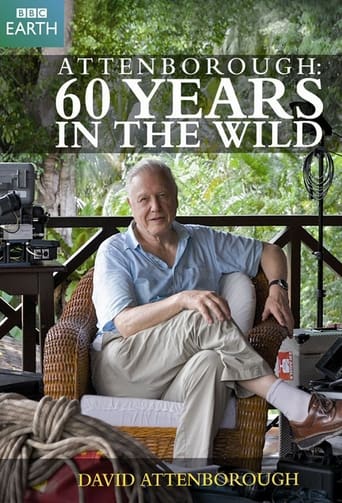
Over three very personal films, Sir David Attenborough looks back at the unparalleled changes in natural history that he has witnessed during his 60-year career.
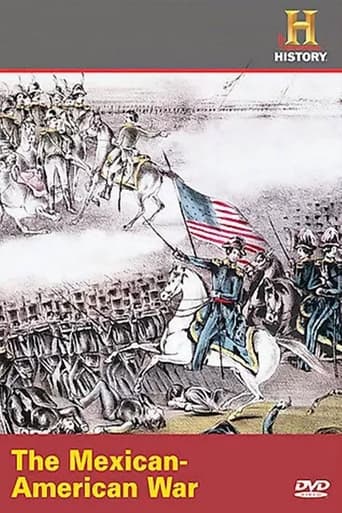
One of the most controversial conflicts in U.S. history, the Mexican-American War erupted as President James K. Polk sought to extend the borders of the nation to the Pacific, taking by force whatever territory stood in the way. This special, produced by The History Channel and hosted by Oscar de la Hoya, looks at the war from the perspective of both countries, and chronicles the fighting from its inception to its conclusion with the Treaty of Guadalupe Hidalgo.
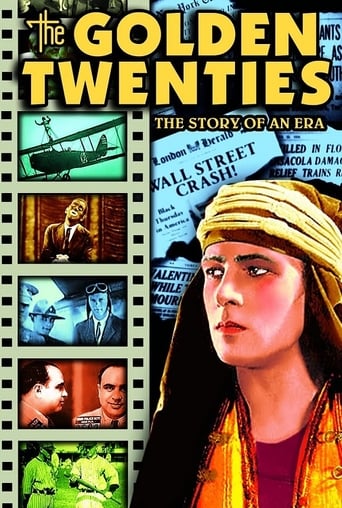
Feature-length compilation of 1920s newsreel footage, with commentary about news, sports, lifestyles, and historical figures.
Documentary looking at the special effects from the bond movies and the men who created them. Narrated by Marie Clairu.
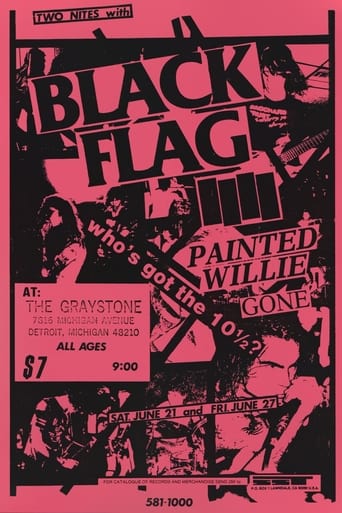
Three bands and crew (a combined total of 13 individuals), 2 Dodge Ram extended cab vans, one equipment truck, one PA system traverse the continental US for six months. A road documentary shot from the inside of the last Black Flag tour ever (the 1986 “In My Head” US tour.) Featuring behind the scenes proceedings and live performances from Black Flag, Painted Willie, and Gone. David Markey was along for the entire trip as the drummer / singer for Painted Willie, documenting the six month tour with his Super-8 camera as it happened. Also features roadie Joe (“Planet Joe”) Cole, soundmen Davo Claasen and Dave “Ratman” Levine, and the tour manager who kept it all together, Mitch Bury. A crucial turning point in American underground rock. The end of the line for a trail blazing American band. Shot in 1986 and completed by director David Markey in 1991 for We Got Power. (futuristika.org)
The film examines the death of the anarchist Giuseppe Pinelli, who fell from the fourth floor of the police headquarters in Milan December 15, 1969, after being stopped following the Piazza Fontana bombing.
Friends of Gilda was a 1993 ninety-minute television special made by CBC Television to benefit the Genesis Research Foundation, the research fundraising arm of the University of Toronto’s Department of Obstetrics and Gynecology. The fundraiser was a tribute to Gilda Radner, who died of ovarian cancer in 1989 and featured a long list of performers with whom she was friendly. Among these were the "surviving cast members" who had shared the stage with Gilda Radner in the celebrated Toronto production of Godspell which was her professional stage debut. Others appearing in the special knew her from Second City Toronto. Several—including Eugene Levy and Andrea Martin—fell into both those categories.
Back on the parisian riots of march 2006. By crossing the points of view between the individual, the crowd, the mass, this film tries to draw from the TV coverage some more nuanced, more troubled perception. "Milling around" projects us in the center of the action by keeping us strangly remote at the same time.
Northern Ireland's legendary star remains one of the most naturally gifted footballers there has ever been.
A biographical study of seminal punk blues singer Jeffrey Lee Pierce and his band the Gun Club.
In this new program, director Joachim Trier, actors Renate Reinsve, Anders Danielsen Lie, and Herbert Nordrum, screenwriter Eskil Vogt, and sound designer Gisle Tveito discuss their passion for cinema and the conception and production of The Worst Person in the World. The interviews were shot in New York and Oslo in 2022. In English, not subtitled. (51 min). Part of the Criterion Collection home video release for THE WORST PERSON IN THE WORLD.
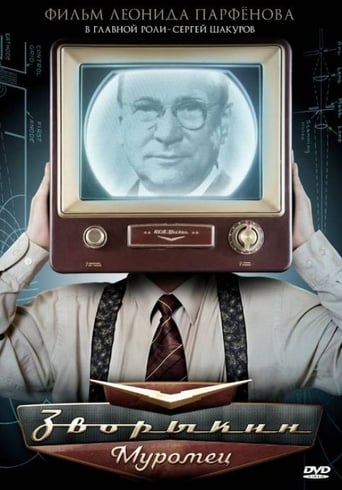
Parfenov's documentary is about a brilliant scientist and engineer, born in Russia, but only known on the other side of the ocean. The invention of modern television changed the history of mankind. The invention has an author, who is almost unknown in his homeland. Vladimir Zworykin, born in Murom, a Russian American, was the person who created distant wireless transmission of images.
Something happened near the town of Rosewell. This event came to be known as the Rosewell incident. The town has since become synonymous with flying saucers crashes, alien visitation, government cover up, or what many say, a jump to conclusions and a gross distortion of facts.
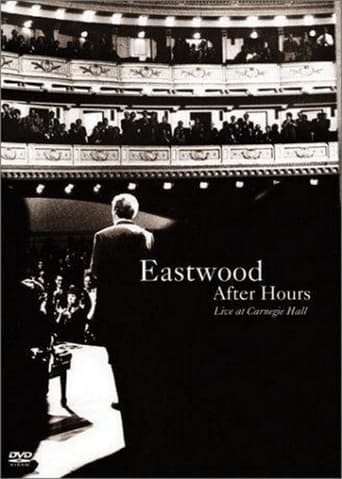
On October 17, 1996, veteran and contemporary jazz greats gathered for a select soiree on the stage of New York's Carnegie Hall, saluting a guy more noted for making popular films than for making sweet music. But as any fan of Clint Eastwood, especially after he started directing 30 years ago, will attest, the award-winning star is also an inveterate jazz lover who has uniquely integrated that musical form into the scores of his films. Join Joshua Redman, Christian McBride, Flip Phillips, Charles McPherson, James Rivers, Slide Hampton, Hank Jones, Thelonious Monk Jr., the Kyle Eastwood Quartet, the Carnegie Hall Jazz Band and more for this scintillating celebration of film and music.
In a investigation into the pernicious origins of Stockholm Syndrome, a thrilling family story intersects with a dramatic bank robbery in Sweden (1973) and the famous kidnapping of Patty Hearst (1974).
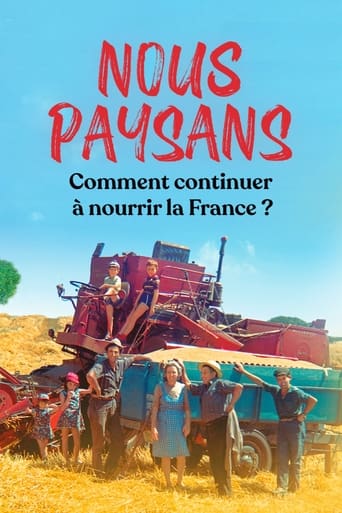
In barely a century, French peasants have seen their world profoundly turned upside down. While they once made up the vast majority of the country, today they are only a tiny minority and are faced with an immense challenge: to continue to feed France. From the figure of the simple tenant farmer described by Emile Guillaumin at the beginning of the 20th century to the heavy toll paid by peasants during the Great War, from the beginnings of mechanization in the inter-war period to the ambivalent figure of the peasant under the Occupation, From the unbridled race to industrialization in post-war France to the realization that it is now necessary to rethink the agricultural model and invent the agriculture of tomorrow, the film looks back at the long march of French peasants.
Activate your FREE Account!
You must create an account to continue watching